

I have a dietary restriction that prevents me from eating pork and pork products, so I have had a difficult time finding food in Japan. Despite these restrictions, I was still able to try a bunch of new foods that don’t contain pork.
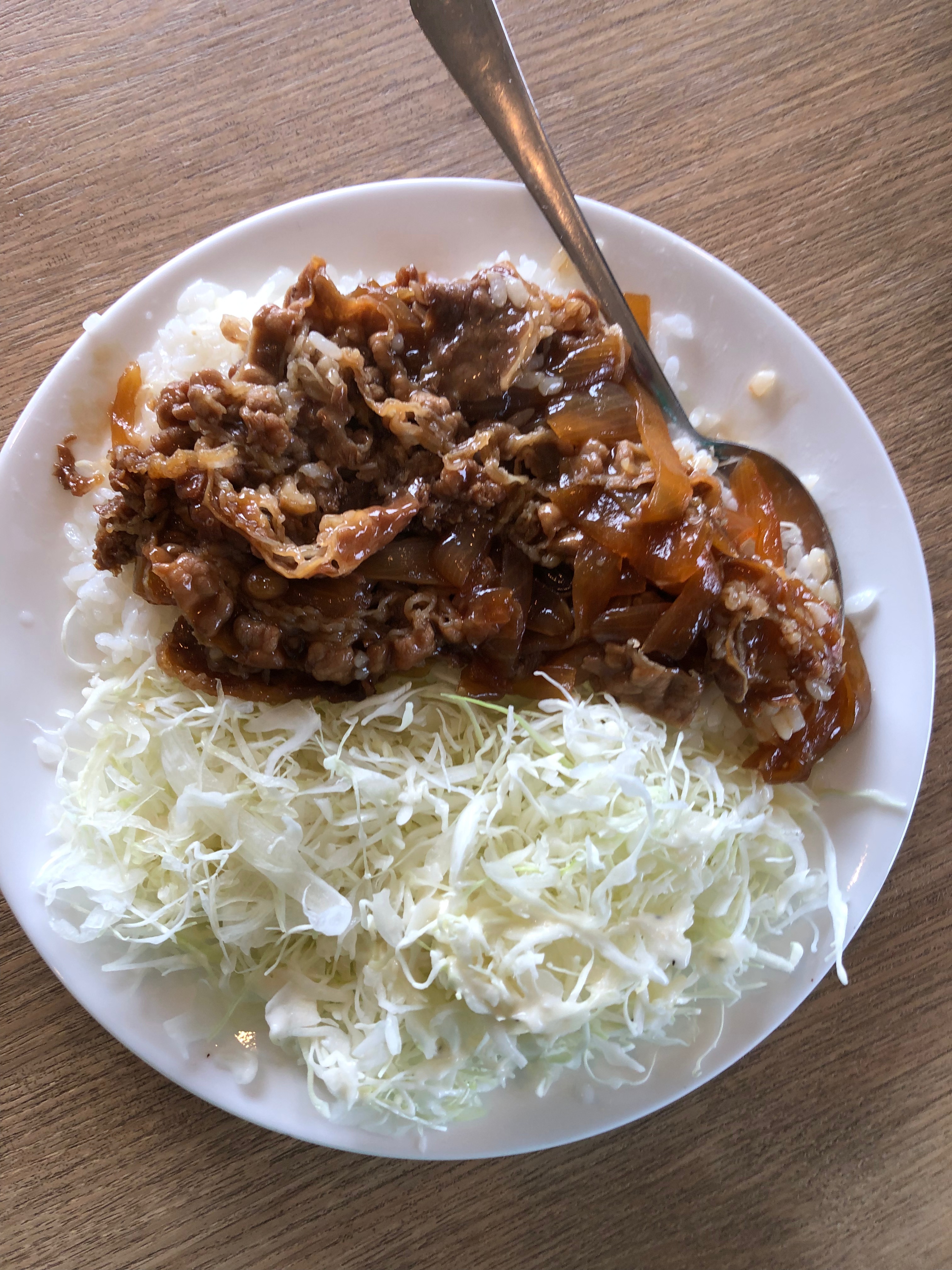
1#: Gyudon
Its best point is that it’s cheap, around 600 yen, and easy to find: just go to any local 7/11 and you will find it in the refrigerated area. Gyudon is like the soul food of japan; it tastes good no matter where you go. There are even big chain stores, for example, Sukiya and Matsuya, that can be found all around Japan, from up north to central Tokyo. (Note: some gyudon places may use pork in the sauce/oil. Always check the allergy information before eating at places.)
2#: Souffle Pancakes


It may not be japanese food, but it’s definitely grown to be a favorite in Japan. From its fluffy exterior to its lightly eggy taste to the tasty sweet sauce on top, these souffle pancakes have become a favorite of mine, too. This location, in particular, makes the best souffle pancakes despite being known for its French toast. They make the best souffle pancakes: firm but light and not too eggy. The strawberry souffle pancakes come with cookie crumbles, whipped cream, strawberry sauce, and fresh strawberries, as shown on the left above. On the right are the banana and caramel souffle pancakes topped with whipped cream, caramel sauce, and fresh banana with a side of vanilla ice cream. These were great no matter the time of day, and since it is close to my dorm, I go on days off. It’s called the French Toast Factory, and it can be found around Tokyo; this location is in my local area.〒211-0004 神奈川県川崎市中原区新丸子東3丁目1135−1 グランツリー武蔵小杉 2F
3#: Japanese Curry


My most eaten food has to be this brand of curry, CoCo Ichibanya Veggie Curry, lightly sweet, spicy, and satisfying, you can add any toppings from squid to fried chicken to natto. This particular brand has multiple curry bases, from pork to vegetarian, which is the type I can eat here in Japan. You can select your desired amount of rice, the spiciness, toppings, and add-ons, which I enjoyed. You just walk in, sit down, and order, and within 15 minutes you have a piping hot bowl of curry and rice. This curry is very different from Indian curry which I have had a lot here as well. I normally get veggies, cheese, and fried chicken on mine and I always add picked vegetables on the side like in the pictures above. I do change it up from time to time, but curry is always my go-to here. You can go anywhere in Japan and find a CoCo Ichibanya nearby, I’ve traveled to Sendai up north and Sapporo even higher up north, and both areas had them. If you are traveling to Japan, definitely go to CoCo Ichibanya and get your first taste of japanese curry.
4#: Monjayaki


Monjayaki, originating from the Tokyo area, shares similarities with okinomiyaki but is truly its own creation, with its flat-like appearance and unique way of cooking. There is no doubt that this Tokyo special is a must-try. Monjayaki, also known as monja, is mostly cabbage, dashi, and wheat flour. From there on, you can select the toppings you want, from mochi and mentaiko, a popular flavor combination, to beef and squid, a bit of surf and turf. From here on, once you have selected your toppings and mix-ins, you can begin the cooking process. The best way to do that is to follow this helpful guide below.
Firstly, you want to add oil to the flat pan in front of you and remove the veggies and toppings onto it. You should make sure that the bowl still has all of the dashi and flour at the bottom; afterward, you’ll use it, so you should put it to the side. From there, you are going to chop up the veggies and meats while stir-frying it on the flat pan in front of you. Once those veggies and the meat are done cooking you are going to create a circle with them; pour some monjayaki sauce in to the bowl with the dashi and flour mixer until it turns a brown color. Following that you pour that into the middle of circle; you don’t want it to spill out of the circle because it will spread across the pan. You should slowly mix it together as it cooks and add the veggies and meat in in the middle. Once its all mixed in you spread it out flat onto the pan and top it with your toppings, mines were green onions and cheese, and enjoy.
5#: Zaru Soba and Tempura Soba


Zaru Soba(the left image) is light and refreshing and perfect for a hot day. The Tempura Soba(on the right) can be eaten anytime and is a nice treat after relaxing in an onsen, which is conveniently right next door. So, after relaxing in the hot onsen, you can enjoy a nice, light, and refreshing lunch.
The tempura soba to the right is in hot soup; you should make sure to eat the soba first because if you let the noodles sit and soak up the soup stock, they will start to break apart easily. I noticed this on my first time eating these noodles, and now I know how to. The soup stock was very light and slightly citrusy, thanks to the yuzu zest on top. The tempura on the side was nice and crispy as well. I definitely recommend this location due to its proximity to an onsen as well as the high-quality soba noodles you can get there. In fact, you should select the full buckwheat noodle section when here, written in red on the menu.
Next up is Zaru Soba, which I actually got from the 7/11 convenience store, so it’s very accessible wherever you go. Zaru soba is served cold and sits to the side of the cold soup stock. You pour this packet of special mineral water onto the soba, add the green onions into the soup stock, and add the packet of streded seaweed on top of noodles like in the photo. From there, you take the noodles and dip them into the broth and enjoy. Both are refreshing and light, leaving you with a satisfied feeling.