
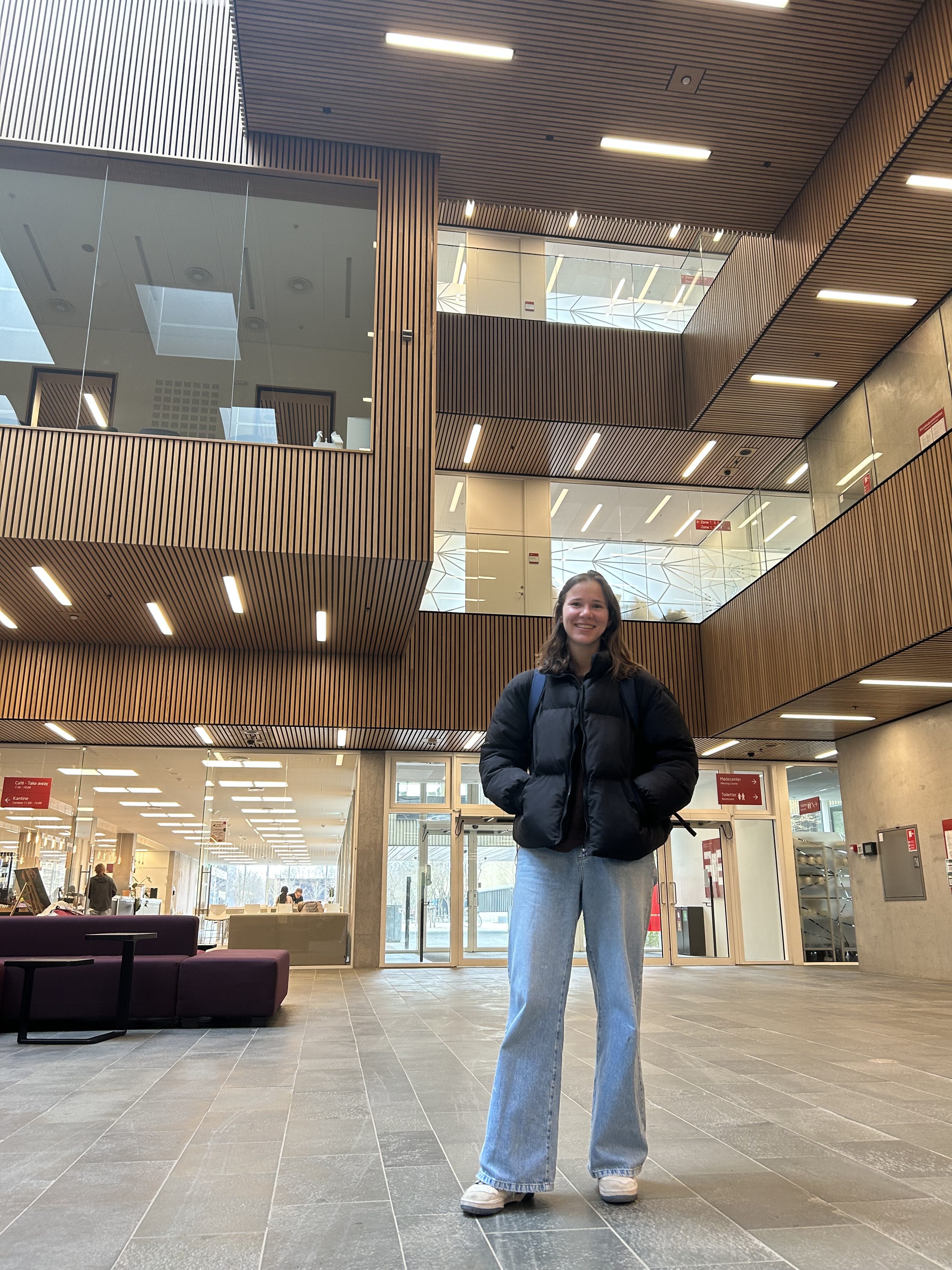
Hi! I’m Kelly Jones and I’m studying abroad at Denmark Technical University (DTU) in Copenhagen. I study Materials Science and Engineering and have a concentration in Materials for Renewable Energy.
Upon being accepted to study at DTU, I was able to choose what classes I would take during my study abroad. My major concentration is in Materials for Renewable Energy, which drove me to look at DTU’s classes that focus on sustainability. I was delighted to see how many options I had. I was able to fulfill nearly all of my technical electives with classes that focused on robust renewable energy technologies: from fuel cells to batteries and everywhere in between. I decided to sign up for DTU’s class called “Green Fuels and Power-to-X” (P2X). Not entirely sure what the class would entail, I was intrigued by the general description of the course, and it fulfilled my last technical elective requirement, so I confirmed my enrollment.
From the first day of class, I quickly learned that P2X refers to the completely renewable process and green electrification of everything! This often involves the production of green hydrogen or synthetic and sustainably produced fuels and chemicals. The class focused on the different processes to produce e-fuels, which are synthetic fuels often produced from hydrogen and carbon dioxide, all powered by renewable energy. I was introduced to the intricacies of methanol, ethanol, and ammonia for fuel. The professor not only explained how each of these e-fuels could be created, but also how all of these technologies could be incorporated into existing electronic and fuel based systems. The curriculum went over the the current technologies for utilizing each fuel and how efficient they are for each use-case. The class also featured talks from industry professionals from companies in Denmark that specialized in these technologies. For example, a person came and spoke about fuel cells and electrolyzers and how their products would be used as the starting molecules for e-fuels. Furthermore, the curriculum explained carbon capture and how it can be utilized to produce blue hydrogen (blue hydrogen still produces carbon, but through steam reforming another other processes, the carbon can be separated and stored underground instead of being released into the atmosphere). An industry professional spoke about biomass and his company’s development of carbon capture technology to make the production of e-fuels more sustainable.
The final project of this class tasked my group with designing a fully renewable system using one of the e-fuels. My group decided to model the production of ammonia and analyze how the fluctuations of wind and solar energy in Denmark would impact the process if the ammonia production was fully renewable. The 40 page paper my group turned in was the results of weeks of work and really put the green transition into perspective. I learned exactly how much land and power would be required to produce a certain amount of ammonia, and my group analyzed the ammonia to be used in long-haul maritime shipping. I’m grateful that I had the opportunity to design a fully sustainable system and compare it to other conventional fuels because not only do I fundamentally understand what infrastructure needs to be implemented to allow for green energy to take over, but I can take knowledge I learned and apply it to other e-fuels for different uses. Because of my experiences in this class and the broad knowledge I learned about renewable energy sources and e-fuels, I am excited to begin my career after graduation to help hasten to green transition by research different methods and helping develop new technology.
Hearing from all of these people about their real world experiences and learning about the different ways that fuels can be converted to greener means gave me hope in the future of the planet. Growing up in the US, I knew that climate change was an ever looming issue and was directly impacting the whole globe, but I was never sure if there was a way to divert humans from the path of fossil fuels. It felt like environmental policy never aligned with the scientific knowledge the world had about climate change, and I had an ever present feeling of dread and pessimism regarding overall actions for making the world more sustainable. I desperately wanted to help the environment, but was unaware of the technologies and how they could be implemented to make the world more sustainable. Taking this class opened my eyes to all of the possibilities for how companies and governments can change the trajectory of climate change. I am inspired by the actions and investment of countries around the world and was excited by how many young engineers wanted to tackle the climate problem. I now understand possible alternatives to conventional fuels and understand the choice and developments that need to be made to public infrastructure to hasten and allow for the green transition. Being in the class gave me hope that there are so many engineers around the world, all working together to make this transition happen. I learned that some of the technology might not be there yet, but the main factor holding the implementation of these fuels back is the lack of infrastructure and industrialization of these fuels. Many of the technologies are capable of producing vast amounts of electricity and chemicals to produce the fuels, but there is an overall lack of investment from governments and the private sector. The country of Denmark has made great strides in becoming reliant on green energy and investing in private companies that focus on the development of green technologies, so I hope that they can serve as a model for other countries to follow.

You must be logged in to post a comment.